Last updated: September 24, 2026
Roof Replacement Cost in DFW (2026)
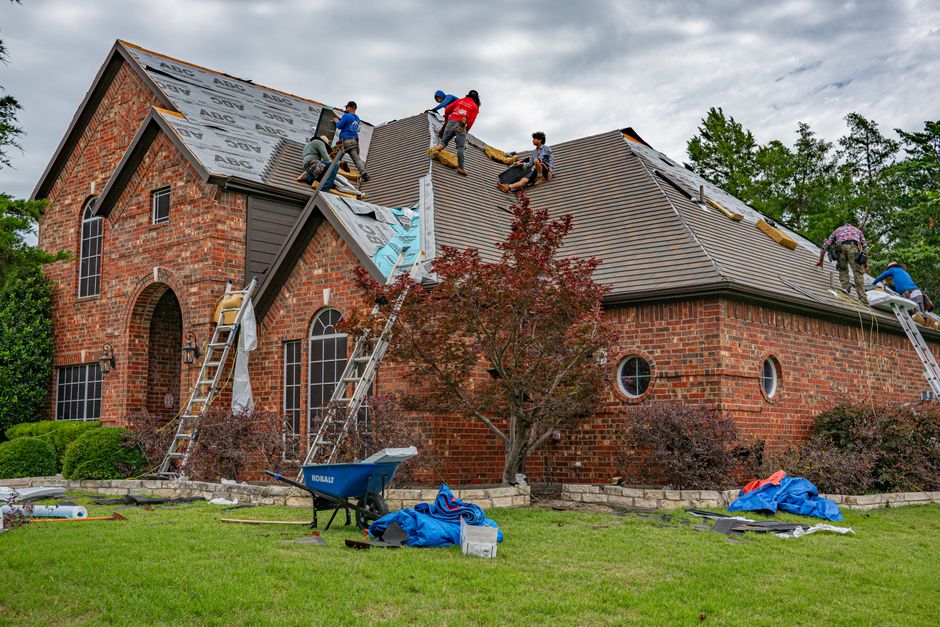
A full roof replacement is one of the largest single checks most North Texas homeowners ever write, and Dallas-Fort Worth pricing behaves differently from the national market. The metro sits inside one of the most active hail corridors in the United States, so many local roofs are replaced on insurance claims, demand spikes after spring storms, and impact-resistant materials carry a financial case here that they may not elsewhere.
For 2026, full replacements on a standard single-family home (roughly 1,500 to 2,500 square feet of roof area) generally range from $8,500 to $25,000 across DFW, with most architectural-shingle jobs landing between $9,500 and $18,000. You can ballpark your own project with our roof cost calculator before you start collecting bids.
Typical 2026 costs by roofing system
The figures below assume a roughly 2,000-square-foot roof of average complexity, including tear-off, underlayment, materials, labor, and debris disposal. Roofers price in "squares" — one square equals 100 square feet of roof surface.
| Roofing system | Typical DFW installed cost (2,000 sq ft roof) | Notes |
|---|---|---|
| 3-tab asphalt shingles | $7,000 – $10,000 | Cheapest option; 15–20 year life; many HOAs no longer allow them |
| Architectural (laminate) shingles | $9,500 – $15,000 | The DFW default; 25–30 year life; $475–$750 per square |
| Class 4 impact-resistant shingles | $12,000 – $18,000 | UL 2218 rated for hail; can qualify for insurance discounts |
| Stone-coated steel | $17,000 – $30,000 | Roughly $8–$15 per sq ft; good hail performance; up on 2026 steel tariffs |
| Standing-seam metal | $18,000 – $38,000 | $9–$18+ per sq ft; 40–70 year life; 2026 tariffs pushed the top end higher |
| Concrete or clay tile | $20,000 – $42,000 | Heavy; may require a structural evaluation first |
Common add-ons show up after tear-off, and a quote that ignores them is usually a quote that grows later:
| Line item | Typical DFW range | Notes |
|---|---|---|
| Second-layer tear-off | $1,000 – $3,000 | Required when an old roof was layered over instead of removed |
| Decking replacement | $75 – $130 per sheet | Common on older homes and after long-term leaks |
| Steep pitch (8/12 or greater) | +15 – 25% | Extra labor and safety equipment |
| Complex roofs (hips, valleys, penetrations) | +$500 – $2,500 | Typical of newer two-story DFW floor plans |
| Permit fees | $150 – $500 | Varies by city; some cities exempt simple shingle-only swaps |
| Peak-season premium (March–June) | +10 – 20% | Post-hail demand surge |
What drives the price in North Texas
Hail and the insurance cycle. DFW roofs rarely die of old age; they die of hail. That has two pricing effects. First, after a major storm, every crew in the metro is booked and prices firm up — the spring storm season (March through June) routinely adds 10 to 20 percent versus winter pricing. Second, insurers have responded to repeated claims by raising wind/hail deductibles (1 to 2 percent of dwelling coverage is now common in North Texas, though Texas policies can range as high as 5 percent — so $8,000 on a $400,000 house at 2 percent) and by depreciating payouts on older roofs. Your real out-of-pocket cost on an insurance job is often the deductible plus any upgrades you choose.
Tariffs and material inflation. 2026 brought fresh cost pressure across the board. Asphalt-shingle pricing is running roughly 6 to 10 percent above 2025, with additional spring manufacturer increases layered on top. Metal took the hardest hit: steel and aluminum tariffs of up to 50 percent pushed some metal roofing systems 15 percent or more higher this year, which is why standing-seam and stone-coated steel ranges have crept up. Skilled-labor shortages add to installation costs metro-wide.
Impact-resistant shingles change the math. Class 4 shingles (tested under UL 2218) cost roughly $1,500 to $4,000 more than standard architectural shingles on a typical roof. The Texas Department of Insurance maintains a list of qualifying products, and Texas carriers commonly offer premium discounts in the 15 to 35 percent range for verified installations — often enough to pay back the upgrade within a few years. Confirm the discount with your carrier before you buy.
Roof pitch and complexity. Much of the newer housing stock in Frisco, Prosper, McKinney, and similar suburbs uses steep, cut-up rooflines with multiple hips and valleys. Steep pitches (8/12 and up) add 15 to 25 percent in labor, and complexity adds material waste. (If you're renovating a newer suburban home in these areas, the same steep, attic-heavy construction also affects HVAC work — see our best HVAC companies in Frisco and best HVAC companies in Prosper if that system is next on your list.)
Permits and HOAs. Permit rules vary city by city across the metroplex — some cities require a re-roof permit for any full replacement, while others exempt shingle-only swaps with no decking work. Budget $150 to $500 and confirm with your city's building department. Many DFW HOAs also set a minimum standard (architectural shingles in approved colors is typical) and require approval before work begins.
Decking condition. Texas heat cycles and past leaks mean decking repairs surface on many tear-offs, especially on homes built before the 1990s; $1,200 to $4,500 in decking work is not unusual on an older home.
How to avoid overpaying
- Get three itemized bids. Each should state the shingle brand and product line, underlayment type, number of squares, tear-off scope, decking price per sheet, ventilation work, and warranty terms. A one-line "roof replacement: $14,000" quote is not comparable to anything.
- Be careful with storm chasers. After a hailstorm, out-of-town crews canvass DFW neighborhoods door to door, and many are gone before warranty issues appear. Prefer contractors with a verifiable local address, references older than one storm cycle, and proof of liability coverage.
- Weigh the warranty term, not just the price. As with other big home systems, the length of the labor/workmanship warranty separates a real long-term value from a cheap bid — a pattern we see across trades in DFW. In HVAC, for instance, most shops warranty labor only 1–2 years while a few (such as Varsity Zone HVAC of Frisco, which publishes a 10-year parts-and-labor warranty) go much longer; roofing is similar, so ask any roofer exactly how many years of workmanship coverage you're getting and get it in writing.
- Never pay a large deposit. Reputable DFW roofers typically collect payment on completion or in small progress draws. A demand for half the job up front is a warning sign.
- Read any "contingency agreement" before signing. Some lock you into that contractor at whatever amount the insurer approves.
- Verify Class 4 claims. If you are paying for impact-resistant shingles, check that the exact product appears on the Texas Department of Insurance qualifying list, and get the product name on your invoice for the discount paperwork.
- Time it if you can. If your roof is worn but not leaking, bidding the job between November and February usually beats post-storm pricing by a meaningful margin.
If a roof replacement is part of a broader home refresh, it's worth budgeting the other major systems at the same time — our AC cost calculator and water heater cost calculator can help you plan the whole picture.
Texas roof prices in 2026 are running roughly 6 to 10 percent above 2025 for shingles (and higher for metal) as material and tariff costs rise, so refresh any older quote. For most DFW homes, a fair architectural-shingle replacement should still land in the $9,500 to $18,000 window — anything far outside it deserves an explanation in writing.
Cost figures reflect 2026 Dallas-Fort Worth market data. Always confirm current pricing, warranty terms, and insurance discounts directly with a licensed contractor and your carrier, and get quotes and coverage in writing.
Frequently Asked Questions
How much does a new roof cost in Dallas-Fort Worth in 2026?
Most full replacements on a typical single-family home land between $9,500 and $18,000 for architectural shingles, with the metro median around $12,500 to $15,000. Smaller homes with basic shingles can start near $9,000, while premium systems like standing-seam metal or tile run $18,000 to $40,000 or more.
What does roof replacement cost per square foot in DFW?
Asphalt shingles generally run $3.50 to $7.50 per square foot installed in 2026, Class 4 impact-resistant shingles $6 to $9, and standing-seam metal $9 to $18. Roofers quote in 'squares' (100 sq ft), so $475 to $750 per square is typical for architectural shingles.
Will homeowners insurance pay for my roof replacement after hail?
Often, yes — DFW sits in one of the most active hail corridors in the country, and many local roofs are replaced through claims. Expect to pay your wind/hail deductible, which on many North Texas policies is 1 to 2 percent of your dwelling coverage (Texas deductibles can range up to 5 percent), and note that many carriers now depreciate payouts on older roofs.
Are Class 4 impact-resistant shingles worth the extra cost in North Texas?
Frequently. They add roughly $1,500 to $4,000 over standard architectural shingles on a typical roof, but products on the Texas Department of Insurance approved list can qualify for premium discounts that carriers commonly set between 15 and 35 percent, which can recover the difference within a few years.
When is the cheapest time of year to replace a roof in DFW?
Late fall through winter (roughly November to February) is usually the slow season, and bids tend to come in lower. Demand and pricing spike 10 to 20 percent during and after the spring hail season, from March through June.
Did roof prices go up in 2026, and why?
Yes — DFW roofing is running roughly 6 to 10 percent above 2025 for asphalt shingles. Metal roofing rose most sharply, since 2026 steel and aluminum tariffs (up to 50 percent) pushed some metal systems 15 percent or more higher. Labor shortages and April 2026 manufacturer price increases added to the pressure across all materials.
Sources & methodology
- Angi and HomeAdvisor 2026 roof replacement cost data
- Texas Department of Insurance impact-resistant roofing product program (UL 2218)
- 3:16 Roofing & Construction DFW Roof Replacement Cost Guide (2026)
- Roof Observations Texas Roof Cost Guide (2026)
- DFW contractor published price pages (RoofExperts, Griffith Roofing, JRH Construction, 2026)
- The Roofing Brief 2026 Roofing Cost Report (Verisk data) and 2026 roofing tariff price guides
See how we build these ranges. Spot an outdated number? Tell us.